Urdu is one of the world's most culturally rich and historically influential languages. Spoken by millions across South Asia and global diaspora communities, Urdu carries centuries of poetry, literature, philosophy, administration, and artistic tradition. In the United Kingdom, Urdu documents are regularly submitted for visa applications, immigration processes, legal proceedings, university admissions, NHS records, and official certification purposes.
But Urdu is far more than simply a language used for paperwork. It represents a unique cultural and linguistic heritage shaped by Persian, Arabic, Turkic, and South Asian influences over hundreds of years. Understanding Urdu properly is essential for accurate translation.
The Origins of the Urdu Language
Urdu belongs to the Indo-Aryan branch of the Indo-European language family. Like Hindi, Punjabi, Bengali, and Gujarati, it ultimately evolved from Sanskrit through Prakrit and Apabhramsha vernaculars spoken across northern India over many centuries.
The language emerged in northern India during the medieval period through contact between local Indo-Aryan dialects and the Persian-speaking administrative and military elites of the Delhi Sultanate and later the Mughal Empire. The word "Urdu" itself derives from the Turkic word ordu, meaning "camp" or "army." Linguists often describe early Urdu as a contact language that developed around military camps, trade centres, courts, and urban settlements where speakers of different languages interacted daily.
Over time, this evolving vernacular absorbed substantial vocabulary and literary influence from Persian, Arabic, Turkish, Sanskrit, and regional Indian languages — producing a sophisticated literary language that became deeply associated with poetry, court culture, education, and intellectual life across South Asia.
Urdu and Hindustani: Shared Spoken Roots
One of the most important facts about Urdu is that it shares a common spoken foundation with Hindi. Linguists often use the term Hindustani to describe the shared colloquial language historically spoken across northern India. In everyday conversation, spoken Urdu and Hindi remain highly mutually intelligible.
However, formal Urdu and formal Hindi diverged historically in script, literary traditions, vocabulary choices, and religious and cultural associations. Modern Urdu generally incorporates more Persian and Arabic vocabulary, while formal Hindi tends to draw more heavily from Sanskrit-derived terminology.
For translation purposes, these distinctions are highly significant. A translator familiar only with conversational Urdu may not possess the literacy, terminology, or specialist expertise required for translating formal legal, academic, medical, or governmental Urdu documents.
The Nastaliq Script: Writing Urdu
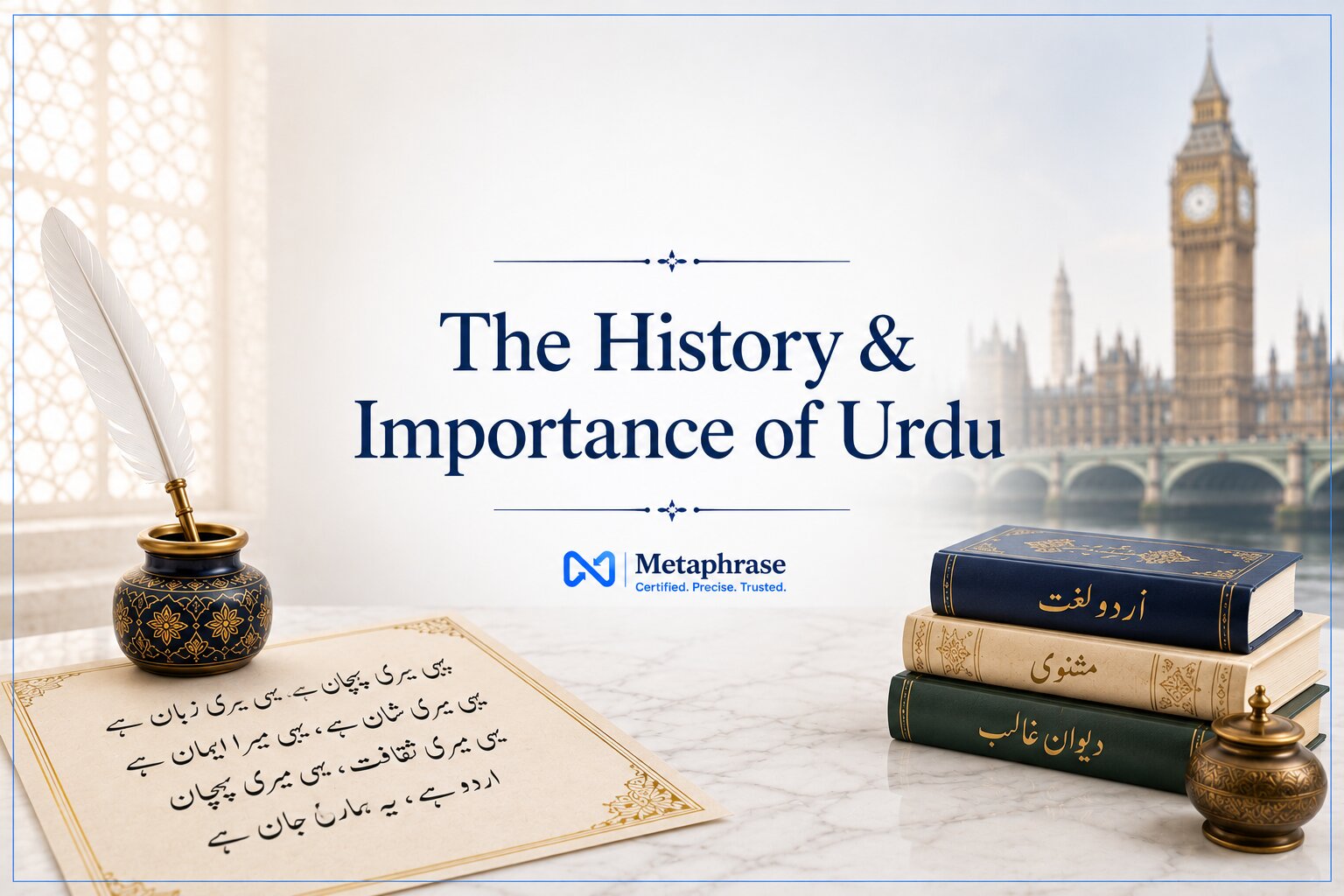
Urdu is primarily written using the Perso-Arabic Nastaliq script — widely regarded as one of the most visually elegant writing systems in the world. Unlike English and most European languages, Urdu is written right-to-left, in a connected cursive style, using contextual letter forms. The Urdu script evolved from Persian calligraphic traditions and includes additional letters specifically developed to represent South Asian sounds.
Nastaliq typography is significantly more complex than many other writing systems because letters change shape depending on their position in a word, characters overlap diagonally, and ligatures are highly stylised. Accurate digital rendering requires specialist formatting. These complexities are particularly important in professional translation and document handling.
In the UK, official Urdu documents frequently include handwritten text, traditional calligraphy, regional terminology, and older administrative formatting. This means accurate Urdu translation requires specialist linguistic and script expertise — not simply conversational fluency.
Urdu Literature and Cultural Significance
Urdu has one of the richest literary traditions in South Asia. The language became especially associated with poetry, philosophy, storytelling, and court literature during the Mughal period. Classical Urdu poetry developed sophisticated traditions including the ghazal, nazm, marsiya, and qasida forms.
Some of the most influential Urdu poets include Mir Taqi Mir, Mirza Ghalib, Allama Iqbal, Faiz Ahmed Faiz, and Josh Malihabadi. Urdu poetry remains deeply influential throughout South Asia and among diaspora communities worldwide. Even today, Urdu continues to play a major role in literature, television, film dialogue, music, journalism, Islamic scholarship, and political discourse.
Urdu in Pakistan and India
Urdu serves as the national language of Pakistan and one of the recognised languages of India.
Pakistan
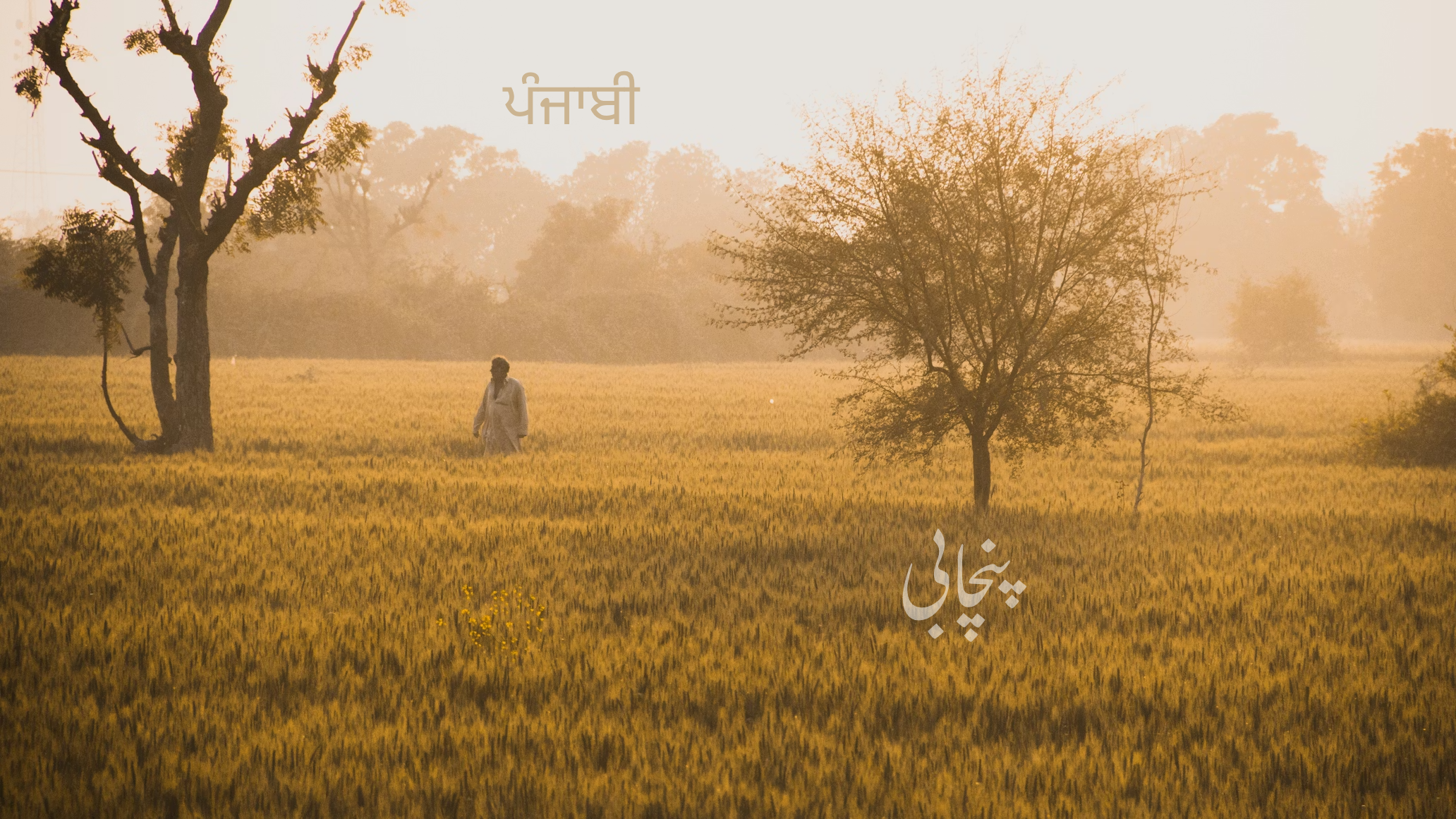
In Pakistan, Urdu functions as a national lingua franca connecting speakers of many regional languages including Punjabi, Sindhi, Pashto, Balochi, and Saraiki. Although relatively few Pakistanis speak Urdu as a first language, it is widely understood and used in education, media, government, law, broadcasting, and public administration.
India
In India, Urdu continues to be spoken by large communities across states such as Uttar Pradesh, Telangana, Delhi, Bihar, Maharashtra, and Jammu & Kashmir. Urdu remains an important literary and cultural language in India, especially in poetry, Islamic education, journalism, and traditional arts.
Global Demography of Urdu
Significant Urdu-speaking communities exist across Pakistan, India, the United Kingdom, Saudi Arabia, the UAE, Canada, the United States, Norway, South Africa, and Australia. The worldwide spread of Urdu reflects migration, education, business, and historical diaspora patterns built up over centuries.
Urdu in the United Kingdom
The United Kingdom is home to one of the world's largest Urdu-speaking diaspora populations outside South Asia. Urdu is widely spoken across British Pakistani and South Asian communities, particularly in Birmingham, Bradford, Manchester, London, Luton, Slough, Leicester, and Glasgow.
Migration from Pakistan and India to Britain accelerated during the post-war decades of the 1950s and 1960s, when workers arrived to support British industries facing labour shortages. Today, Urdu remains deeply embedded in British Asian cultural life — commonly used in family communication, community organisations, mosques and religious education, television and media, business networks, and legal and immigration documentation.
Institutional Importance in the UK
The large Urdu-speaking population means UK institutions regularly require professional Urdu translators and interpreters. Urdu documents are frequently submitted to UKVI, the Home Office, UK courts, universities, NHS trusts, and local councils. Common Urdu documents requiring certified translation include birth certificates, marriage certificates, Nikah Nama documents, academic transcripts, police certificates, medical records, affidavits, financial documents, and court paperwork.
Need a Certified Urdu Translator?
Professional Urdu translation for UKVI, the Home Office, courts, universities, and the NHS.
Why Urdu Translation Requires Specialist Expertise
Urdu translation is highly specialised. Professional translators must accurately handle the Nastaliq script, legal terminology, religious terminology, regional linguistic variation, historical administrative language, and cultural nuance.
Handwritten and Traditional Documents
Many Urdu documents submitted in the UK contain handwritten or partially handwritten text. This is particularly common with Nikah Nama documents, older Pakistani records, court paperwork, affidavits, and educational certificates. Reading handwritten Nastaliq script accurately requires substantial expertise that goes far beyond standard language training.
Religious and Legal Terminology
Urdu documents often contain Islamic legal terminology or administrative expressions derived from Persian and Arabic. Examples may include marriage contract terminology, religious titles, court references, property terminology, and traditional honorifics. A professional translator must understand both the linguistic meaning and the cultural context of these terms.
Transliteration Challenges
Romanisation of Urdu names into English is frequently inconsistent. The same name may appear as Muhammad, Mohammed, or Mohammad — or Hussain, Husayn, or simply its Urdu form حسین. Spelling variations across passports, certificates, and bank documents are extremely common. Professional translators must preserve accuracy while identifying inconsistencies where relevant.
UK Institutional Standards
Certified translations submitted to British institutions must generally include a complete and accurate translation, translator or agency credentials, a certification statement, signature and contact details, and proper formatting. Poor-quality translations can lead to delays, document rejection, or legal complications.
Choosing Professional Urdu Translation Services in the UK
When selecting a certified Urdu translator in the UK, it is important to work with experienced professionals familiar with both Urdu and British institutional requirements. Look for:
- Professional accreditation such as membership of the Chartered Institute of Linguists (CIOL) or Institute of Translation and Interpreting (ITI)
- Experience with Pakistani and Indian documents — Nikah Namas, NADRA records, Pakistani court orders, and Indian Urdu-language affidavits
- Familiarity with UKVI and Home Office requirements, including the specific wording and format expected by immigration caseworkers
- Proper certification procedures — a signed declaration of accuracy with full translator credentials
- Confidential handling of sensitive documents and clear communication about turnaround times
At Metaphrase Ltd, our CIOL-certified Urdu translators provide professional Urdu translation services accepted by UK institutions, including the Home Office, UKVI, courts, universities, and NHS organisations. Learn more about our certified Urdu translation service.
Urdu as a Living Cultural Language
Urdu is far more than an administrative language. It is a language of poetry, identity, migration, memory, and cultural continuity. From the classical poetry of Ghalib and Iqbal to modern television, journalism, and digital media, Urdu continues to evolve while maintaining deep historical roots.
When Urdu documents arrive at a university admissions office, a Home Office caseworker's desk, or an NHS clinic in Britain, they represent real people, families, histories, and futures. That is why accurate translation matters — and why working with a qualified Urdu linguist is not a luxury, but a necessity.